
Learning how to choose rugby boots comes down to four practical questions: what position you play, what surface you play on, how the boot fits, and what you want to spend. Get those right and you can’t go far wrong.
This guide explains the real differences between boot types and stud configurations, who each suits, and how to compare prices sensibly before buying.
Choose by position and surface first, then narrow down by fit and budget. Forwards on soft winter pitches will want traction and often replaceable studs; backs on firmer ground benefit from lighter moulded boots; and a hybrid covers the middle if you play mixed roles or across different surfaces.
Once you know the type of boot you need, it is worth comparing prices across the retailers we cover, as the cheapest available price often varies by size and colourway. Use the live comparison below to check the latest offers before buying.
Start with your position
Position is the biggest single factor in choosing the right boot. The demands on a prop are very different from those on a winger, and boot design reflects that.
- Front row and second row: boots built for stability and traction, usually with a higher stud count and a more supportive upper. Useful for scrummaging, mauling and holding ground.
- Back row: hybrid boots that balance grip with a bit more speed. A common choice for players who do a bit of everything.
- Backs and wingers: lighter, lower-cut boots with a fewer, sharper studs aimed at acceleration and changing direction.
If you play across the pack or move positions regularly, a hybrid boot is often the sensible middle ground rather than buying for one specific role.
Match the boot to the pitch and surface
UK rugby is played on everything from waterlogged winter pitches to hard, dry summer ground and increasingly on artificial surfaces. The boot needs to suit where you actually play.
- Soft ground (SG): longer studs, often metal or a mix, for grip in mud and wet conditions typical of a British winter.
- Firm ground (FG): moulded studs for drier, harder natural pitches. More versatile across the season for many players, but generally used most in pre season.
- Artificial ground (AG): shorter, more numerous moulded studs designed for 3G and astro surfaces.
If you train on 3G but play matches on grass, that split matters. Some players end up with two pairs, but if budget is tight, a firm-ground boot is usually the most adaptable single option for club rugby.
Understanding stud type
Studs fall broadly into three categories, and the right choice depends more on your surface than on price.
Moulded studs are fixed to the sole and are the most common all-round option. They suit firm and artificial ground and need less maintenance.
Screw-in (replaceable) studs let you swap stud length to match conditions, which is handy if you play through a full UK season across changing pitches. They are popular with forwards for soft-ground grip.
Hybrid soles combine moulded and replaceable studs, aiming to cover more conditions from one boot.
Stud rules vary by club, competition and age group, so check the manufacturer’s guidance and your club’s requirements rather than assuming a configuration is permitted.
Getting the fit right
Fit matters more than almost any headline feature. A boot that fits poorly will underperform regardless of price or technology.
Rugby boots are generally worn snug, with your longest toe close to the end without pressing hard. Width varies between brands, so a size that fits in one make may feel narrow or roomy in another. If you have wider feet, look for models that offer wider fittings.
The upper part of rugby boots are typically synthetic or leather-effect materials. Synthetic tends to be lighter and lower maintenance; some players prefer a softer, more moulding leather feel. Neither is automatically better, so weigh it against your budget and preference.
How to choose rugby boots on a budget
More expensive does not always mean more suitable. A £200 boot built for elite backs is not the right buy for a club forward, and most amateur players do not need the top of a range to get the features that matter.
For club and recreational rugby, the mid-range usually offers the best value: solid materials, a sensible stud setup and a comfortable fit without paying for pro-level extras. Reserve the premium end for players with a specific need who know what they are paying for.
For juniors and growing feet, spending heavily on a boot that will be outgrown quickly rarely makes sense. A well-fitting, mid-priced boot is often the more practical choice.
Quick summary table
| What to weigh up | Quick guidance |
|---|---|
| Position | Forwards want stability and grip (often an 8-stud layout); backs want speed and agility (lighter, often 6-stud). |
| Pitch & surface | Dry or firm grass: firm ground (moulded). Wet, muddy winter pitches: soft ground (longer studs). 3G or artificial: AG or firm ground. |
| Stud type | Moulded studs are low-maintenance and versatile; metal screw-in studs let you swap lengths for the conditions. |
| Fit | Snug and locked-in through the midfoot with no heel slip. Sizing varies between brands, so check each brand’s guide. |
| Budget | Mid-range covers most club players; pay more mainly for heavy-ground durability and replaceable studs. |
Some of the rugby boots we cover
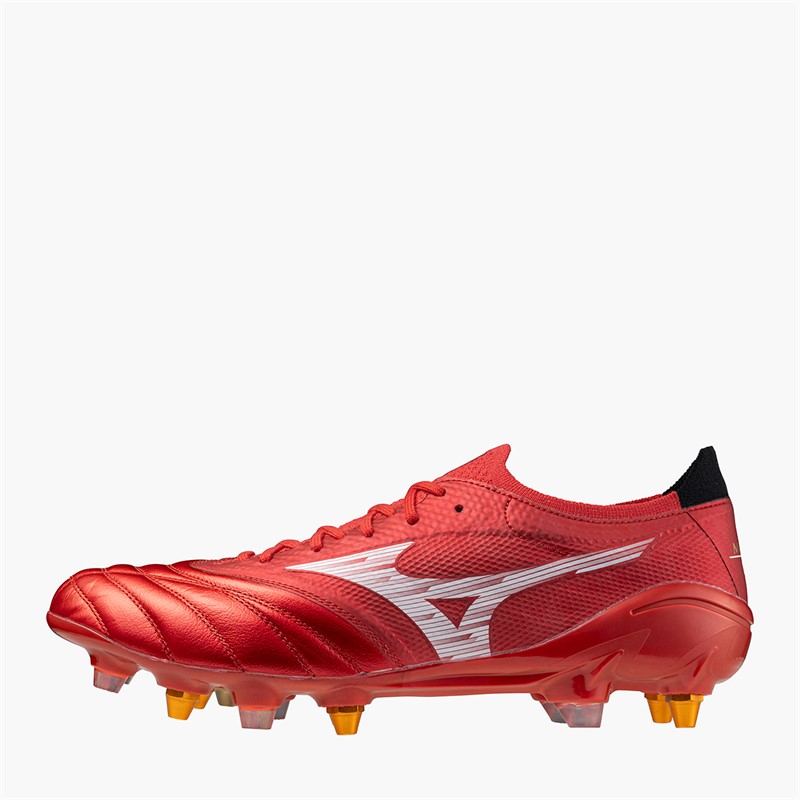 Mizuno Morelia Neo IV Beta Elite IX Soft Ground Rugby Boots – Red/White/Blackfrom £79.99
 Canterbury Phoenix Genesis Team Soft Ground Rugby Boots – White/Yellowfrom £75.00
 Adidas Kakari Elite Rugby Boots – Neon YellowNo offers today
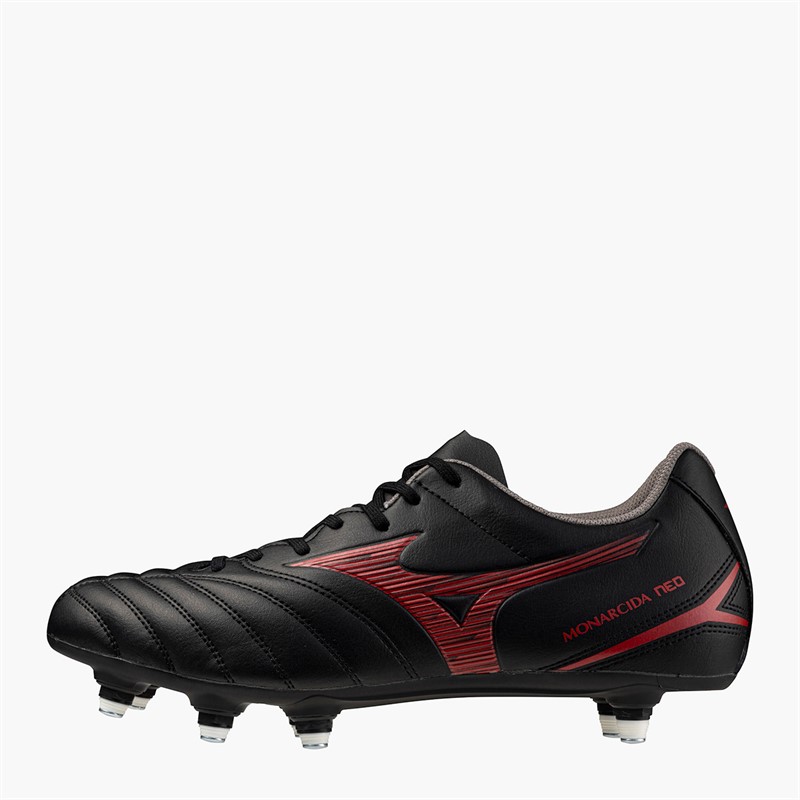 Mizuno Monarcida Neo III Select Soft Ground Rugby Boots – BlackNo offers today
 Canterbury Speed Infinite Elite Soft Ground Rugby Boots – BlueNo offers today
 Adidas Adizero RS15 Pro Firm Ground Rugby Boots – Off Whitefrom £69.99
FAQ
How do I choose rugby boots for a beginner or junior?
Prioritise fit and a versatile firm-ground moulded boot in the mid-price range. Beginners and growing players rarely need premium models, and a comfortable, adaptable boot is usually the most practical choice. Check the manufacturer’s guidance and your club’s requirements on studs.
Are soft-ground or firm-ground boots better for UK rugby?
It depends on your pitch. Soft ground suits muddy winter grass with longer studs for grip; firm ground suits drier, harder pitches and is more versatile across a season. Many club players manage well with firm ground, while forwards on wet pitches often prefer soft ground or screw-in studs. A lot of players carry two pairs of boots to adapt to the UK weather.
Is it worth paying more for premium rugby boots?
Not always. Premium boots target specific playing needs and elite performance. For most club and amateur players, mid-range boots offer the features that matter at better value.
Related guides
RugbyDeals helps you compare prices across the retailers and products we feature on our site. Prices and stock can change, so always confirm the final details on the retailer’s site before buying. Our content is for general information only and isn’t safety, medical or buying advice — always follow the manufacturer’s guidance and speak to a professional where it matters. We may earn a commission when you buy through our links, at no extra cost to you.