
This rugby boot size guide explains how boot sizing actually works, how to measure your foot properly, and why the same nominal size can fit differently from one brand to the next. Getting the fit right matters more than the number on the box, so it pays to understand what you are looking for before you compare prices.
Below we cover how to measure at home, how fit varies by boot type, and the practical checks worth making before you commit.
Start with a proper foot measurement, treat your usual UK size as a guide only, and always cross-check against the specific brand’s size chart before ordering. Wider or higher-volume feet generally benefit from more generous-fitting brands, while narrow feet suit the closer-cut options aimed at backs.
Once you know the brand and size that works for you, compare the current prices for that exact size across the retailers we cover, as the cheapest option can differ from one size to the next.
Why rugby boot sizing is not straightforward
Rugby boots are usually sold in UK sizes, but the number alone tells you very little about how a boot will actually fit. Two boots labelled the same size can differ noticeably in length, width and volume depending on the brand and the last (the foot-shaped mould) each manufacturer uses.
Some brands run generally narrow, others wider. Some leave more room in the toe box, others sit snug. This is why a player can be a size 9 in one brand and comfortable in a size 8.5 or 9.5 in another.
The practical takeaway: treat your usual size as a starting point, not a guarantee. Always check the individual brand’s own size guide, which we link through to alongside the listings.
Fit differences between boot types
Rugby boots vary in shape depending on the position they are aimed at, and that affects fit as much as the size label.
Boots built for forwards and the front row tend to have a more generous, supportive fit with a sturdier upper. Boots aimed at backs are often lower profile and cut closer to the foot for a snug, responsive feel. A snug back’s boot in your usual size may feel tighter than a forward-oriented boot of the same size.
Upper material matters too. Leather and leather-style uppers can give slightly as they are worn in, while some synthetic uppers hold their shape and offer less flex. Factor this into how much room you want on day one.
Getting the fit right: what to check
A good fit is snug through the midfoot and heel with a small amount of room at the toe. Too much space causes the foot to slide, which undermines traction and stability; too little leaves no room for movement.
- Aim for a thumb’s width of space beyond your longest toe.
- Check the heel holds firmly without lifting when you walk.
- Make sure the boot is snug across the widest part of the foot without pinching.
- Wear the socks you would play in when trying boots on.
If you are between sizes, your foot shape usually decides. Wider or higher-volume feet often do better sizing up or choosing a wider-fitting brand, while narrow feet may prefer the closer-cutting options.
Buying for growing children
Sizing for junior players brings an extra consideration: growth. Boots that fit perfectly today may be outgrown within a season, so parents often look for a little room to allow for it.
That said, a boot that is too big compromises how securely the foot sits, which affects control and comfort on the pitch. A small amount of growing room is sensible; a full size or more is usually too much.
Measure your child’s feet regularly, as they can change quickly. Junior sizing conversions differ between brands too, so check each brand’s chart before ordering.
Why it pays to compare across brands and retailers
Because fit varies so much, the best-value boot is the one that fits your foot properly, not simply the cheapest listing. Once you have narrowed down a brand and size that suits you, comparing prices becomes worthwhile.
Prices vary between retailers and often by size, so a specific size may be cheaper at one retailer than another. Across the retailers we cover, it is worth checking the current offers for your size before buying rather than assuming one shop is consistently cheaper.
Some of the rugby boots we cover
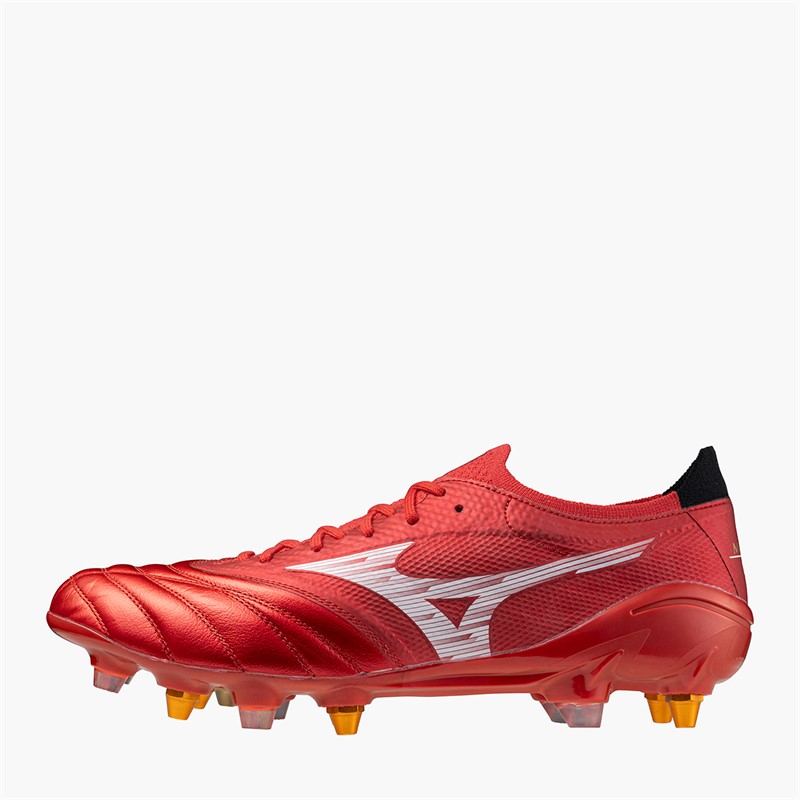 Mizuno Morelia Neo IV Beta Elite IX Soft Ground Rugby Boots – Red/White/Blackfrom £79.99
 Canterbury Phoenix Genesis Team Soft Ground Rugby Boots – White/Yellowfrom £75.00
 Adidas Kakari Elite Rugby Boots – Neon YellowNo offers today
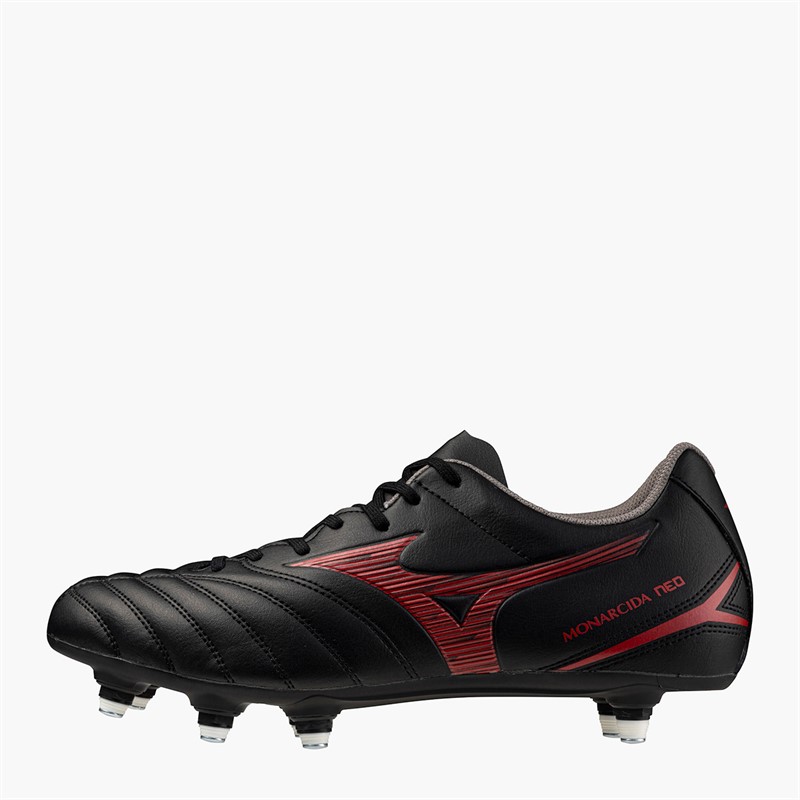 Mizuno Monarcida Neo III Select Soft Ground Rugby Boots – BlackNo offers today
 Canterbury Speed Infinite Elite Soft Ground Rugby Boots – BlueNo offers today
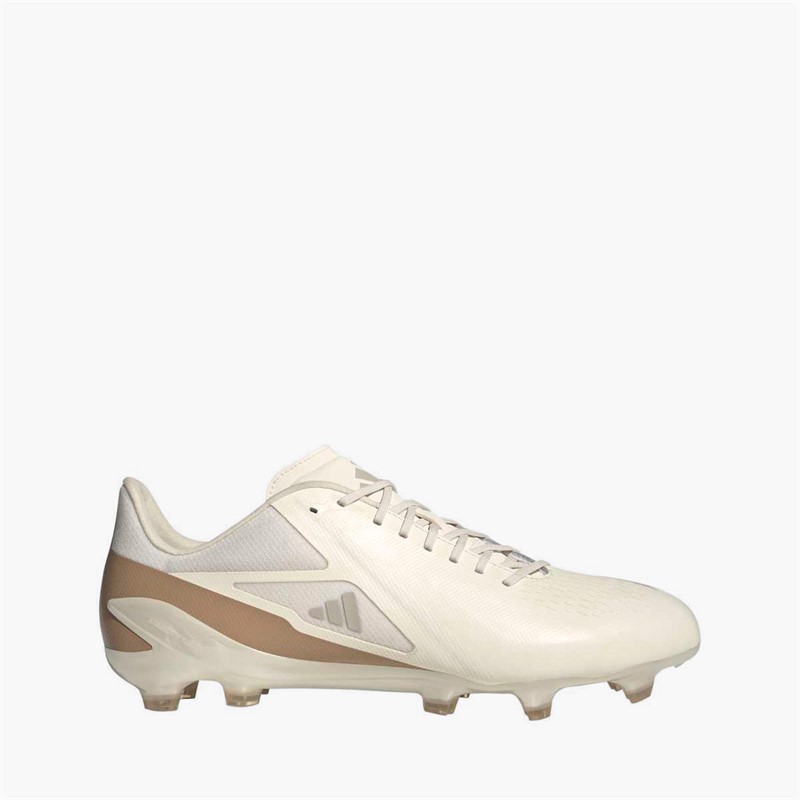 Adidas Adizero RS15 Pro Firm Ground Rugby Boots – Off Whitefrom £69.99
FAQ
How accurate is a rugby boot size guide compared to my trainer size?
A rugby boot size guide based on your measured foot length is far more reliable than your trainer size. Rugby boots often fit closer than everyday footwear, and sizing varies between brands, so measure your foot and check each brand’s own chart rather than assuming your trainer size carries over.
Should I size up in rugby boots?
Not usually. Aim for a snug fit with about a thumb’s width at the toe. Sizing up tends to leave the foot sliding, which affects stability. If you are between sizes, let your foot width and the brand’s fit decide rather than automatically going larger.
Why do the same size boots from different brands fit differently?
Each brand uses its own last, or foot-shaped mould, so length, width and volume differ even at the same nominal size. Upper materials also affect how snug a boot feels. This is why checking the individual brand’s size guide matters.
Related guides
RugbyDeals helps you compare prices across the retailers and products we feature on our site. Prices and stock can change, so always confirm the final details on the retailer’s site before buying. Our content is for general information only and isn’t safety, medical or buying advice — always follow the manufacturer’s guidance and speak to a professional where it matters. We may earn a commission when you buy through our links, at no extra cost to you.