
Choosing the best rugby boots for a forward comes down to stability, traction and support far more than lightweight speed. Forwards spend their time in the scrum, at the breakdown and driving in contact, so the priorities differ from those of a back.
This guide explains what actually matters when picking boots for a forward, how the different positions change the decision, and what to compare before buying across the retailers we cover.
What forwards need from a boot
Forwards generate and absorb a lot of force. A prop pushing in the scrum, a lock cleaning out a ruck and a flanker hitting contact all need boots that hold the ground and support the foot under load.
The main priorities are traction, lateral stability and a supportive, durable upper. Outright weight matters less than it does for a winger. A slightly heavier boot with a stronger structure is usually a sensible trade-off for a forward.
- Traction: grip for scrummaging, driving and mauling.
- Stability: a wider platform to resist rolling under load.
- Support and durability: an upper and sole that cope with heavy contact.
Stud configuration: 8-stud vs 6-stud
The biggest practical difference for a forward is the stud layout. An 8-stud configuration places extra studs under the midfoot, which gives more grip and a more stable base when driving forward. This is why 8-stud boots are traditionally associated with the tight five.
A 6-stud layout is lighter and more common among back-row forwards and backs who need to change direction and cover ground. Some flankers and number eights sit between the two, favouring a 6-stud boot for mobility.
As a rough guide: front row and second row often benefit from 8-stud boots, while the back row can go either way depending on how much running they do.
| Position | Typical stud choice | Why |
|---|---|---|
| Front row | 8-stud, soft ground | Extra midfoot studs for a stable base when scrummaging and driving |
| Second row | 8-stud, soft ground | Grip and stability at the scrum, maul and lineout |
| Back row | 6- or 8-stud | A balance of traction and mobility for covering ground and hitting contact |
Soft ground vs firm ground for a forward
For a forward, the choice between soft-ground and firm-ground boots comes down to the pitch — and both have their place, which is why many forwards end up with a pair of each.
Soft ground (SG) boots use longer, replaceable metal or aluminium-tipped studs — usually six of them — that dig in and clear mud. They come into their own on the wet, heavy, churned-up pitches of a typical UK winter, giving a forward the grip and stable base to scrummage, drive and maul without slipping. This is the boot most forwards reach for through the core of the season.
Firm ground (FG) boots use shorter, moulded rubber or plastic studs fixed into the sole. They work best on dry or lightly damp grass and on 3G surfaces, where long metal studs are unnecessary. A forward will usually wear these in pre-season, in late spring, and for training on harder ground.
If you only buy one pair for a typical UK club season, soft-ground boots with replaceable studs are the more flexible choice for a forward, since you can swap stud lengths as conditions change. Just check the boot allows the stud lengths you need, and check the stud rules that apply to your club and competition, as these follow World Rugby’s guidance.
Fit, width and support
Fit is where a lot of buyers go wrong. A forward’s boot needs to feel locked in through the midfoot, with no heel slip when driving. A boot that is too narrow or too loose will undermine even the best stud layout.
Consider width if you have a broader foot — some ranges run narrow. Higher-cut or supportive collars can help around the ankle in contact, though this is personal preference rather than a rule.
Sizing varies between brands, so it is worth comparing size guides and, where possible, trying boots on. Prices vary between retailers and sizes, so the cheapest option can differ depending on the size you need.
How much should a forward spend?
More expensive boots tend to offer lighter materials, better stud technology and a more refined fit. For a forward, though, the premium features aimed at speed and agility are not always worth paying for.
Most amateur and club forwards do not need the top-tier model. A mid-range boot with a solid 8-stud or 6-stud layout, a durable upper and a fit that suits your foot will cover the vast majority of club rugby.
Spend more if you play regularly on heavy ground and want replaceable studs and stronger materials. Otherwise, the mid-range options among the boots we compare usually deliver the features that matter.
If you play in the front row or second row, prioritise an 8-stud, soft-ground boot with a stable base and a snug midfoot for scrummaging and driving. Back-row forwards who cover more ground may prefer a lighter 6-stud layout that helps with acceleration and direction changes.
Whichever suits your position, focus on fit and traction first and let price follow. It is worth comparing current prices across the retailers we cover, as the cheapest available option often varies by size and stud type.
Some of the rugby boots we cover
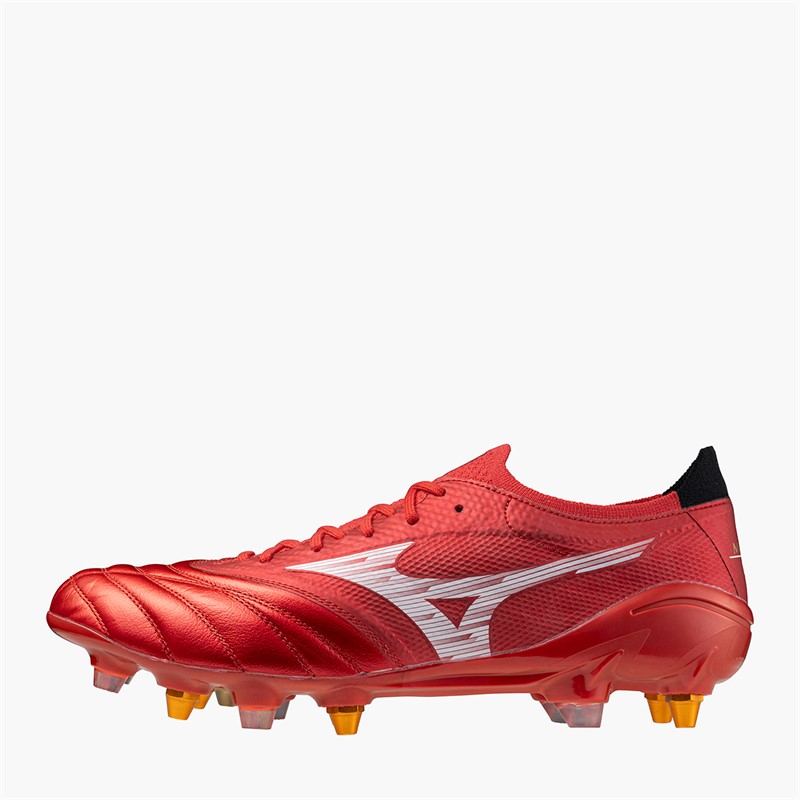 Mizuno Morelia Neo IV Beta Elite IX Soft Ground Rugby Boots – Red/White/Blackfrom £79.99
 Canterbury Phoenix Genesis Team Soft Ground Rugby Boots – White/Yellowfrom £75.00
 Adidas Kakari Elite Rugby Boots – Neon YellowNo offers today
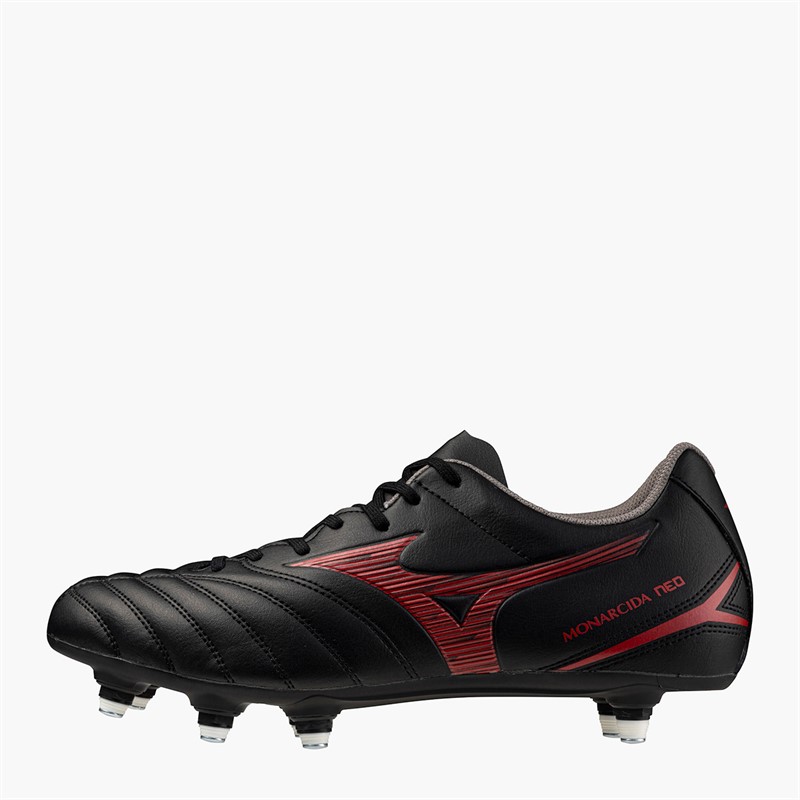 Mizuno Monarcida Neo III Select Soft Ground Rugby Boots – BlackNo offers today
 Canterbury Speed Infinite Elite Soft Ground Rugby Boots – BlueNo offers today
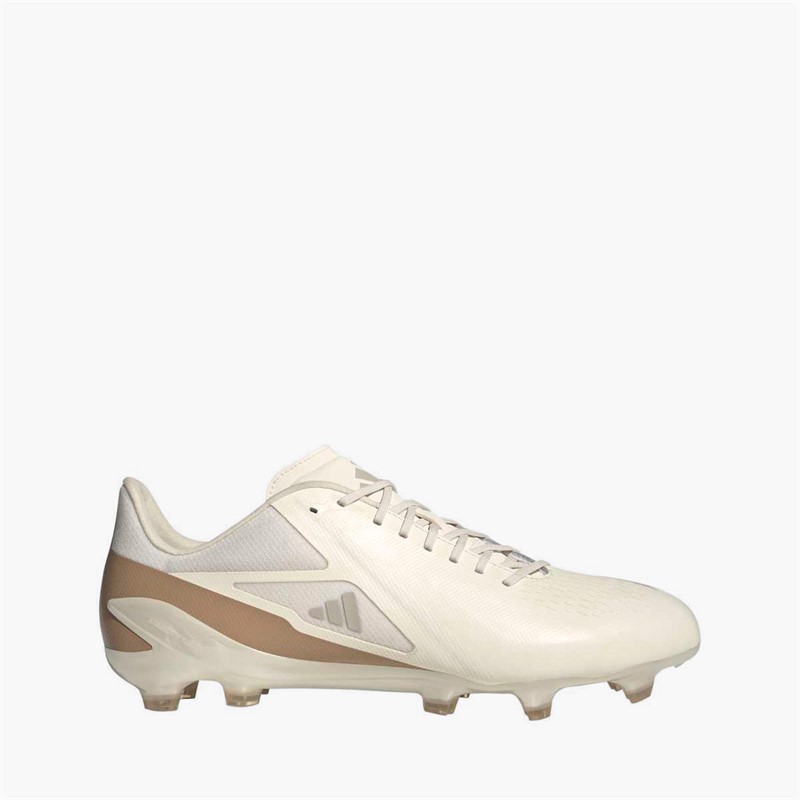 Adidas Adizero RS15 Pro Firm Ground Rugby Boots – Off Whitefrom £69.99
FAQ
What are the best rugby boots for a forward on wet UK pitches?
For heavy, wet ground, look for soft-ground boots with longer replaceable studs, and ideally an 8-stud layout if you play in the tight five. These clear mud and give more grip when scrummaging and driving. Confirm stud regulations with your club and referee, as these follow World Rugby guidance.
Do forwards need 8-stud rugby boots?
Not always. Front-row and second-row forwards often benefit from the extra midfoot studs of an 8-stud boot for stability in the scrum. Back-row forwards who run more can be well suited to a lighter 6-stud layout. It depends on your position and playing style.
How much should I spend on rugby boots as a forward?
Most club forwards do not need the most expensive model. A mid-range boot with the right stud configuration, a durable upper and a good fit covers most needs. Spend more mainly if you play often on heavy ground and want replaceable studs and stronger materials.
Related guides
RugbyDeals helps you compare prices across the retailers and products we feature on our site. Prices and stock can change, so always confirm the final details on the retailer’s site before buying. Our content is for general information only and isn’t safety, medical or buying advice — always follow the manufacturer’s guidance and speak to a professional where it matters. We may earn a commission when you buy through our links, at no extra cost to you.