
Choosing between firm ground vs soft ground rugby boots comes down to the pitch you play on and the traction you need. The stud type affects grip, stability and how the boot handles wet or dry ground.
This guide explains what each type is, when each makes sense on typical UK pitches, and how to weigh the trade-offs before you compare prices.
If you play mostly on dry or firm ground, moulded firm ground boots are the practical choice for most players and tend to cost less. If your rugby is played through a muddy UK winter, soft ground boots with longer studs give you the grip that shorter moulds lack.
Many players who play across the full season keep both. When you’ve settled on a type, compare current prices below, since the cheapest option can differ by size and retailer.
What firm ground boots are
Firm ground boots, often labelled FG, have moulded studs or blades built directly into the sole. The studs are shorter and there are usually more of them, spreading grip across the foot.
Because nothing unscrews, they tend to be lighter and lower maintenance. They suit dry, firm and shorter grass, which describes a lot of UK pitches in late summer, early autumn and pre-season.
The shorter studs give a stable, planted feel on harder ground. On very wet or churned surfaces, though, they can struggle to bite.
What soft ground boots are
Soft ground boots, usually labelled SG, use longer studs that are typically metal-tipped and screw in, so they can be replaced or swapped for different lengths.
The longer studs dig deeper, which helps on muddy, wet and heavy pitches, the kind of conditions common across UK winters. Fewer, longer studs penetrate soft ground where moulded soles would sit on top of the surface.
The replaceable element means you can change worn studs rather than the whole boot, though it does add a bit of weight and upkeep.
Firm ground vs soft ground rugby boots: quick comparison
| Feature | Firm ground | Soft ground |
|---|---|---|
| Studs | Moulded, fixed into the sole | Longer, metal screw-in |
| Best pitch | Dry or firm grass, and 3G | Wet, muddy winter grass |
| Typical layout | More, shorter studs | Six or eight longer studs |
| Weight & build | Lighter, lower-profile | Heavier, more robust |
| Maintenance | Low — nothing to replace | Check and replace studs over time |
The main practical differences:
- Studs: FG has shorter moulded studs or blades; SG has longer, usually replaceable studs.
- Best conditions: FG suits dry and firm ground; SG suits wet, muddy and heavy pitches.
- Weight: FG is generally lighter; SG carries a little more weight from the stud fittings.
- Maintenance: FG is low upkeep; SG studs can be replaced when worn.
- UK season: FG leans towards late summer and autumn; SG comes into its own through winter.
Some players own a pair of each and pick depending on the forecast and the state of the pitch on the day.
How your position affects the choice
Forwards spend more time in the scrum, at the breakdown and driving through contact, so stability and grip when pushing against the ground matter. Longer studs can help anchor on soft surfaces.
Backs prioritise acceleration, footwork and quick changes of direction. Many favour a lighter, lower-profile boot, which often points towards firm ground moulds on drier days.
These are tendencies rather than rules. Plenty of players choose based on pitch conditions first and position second.
How to choose for typical UK pitches
Start with where and when you actually play. If most of your rugby is on dry or firm grass, or on shorter pre-season pitches, firm ground boots are the sensible default and usually the cheaper, lower-maintenance option.
If you play through a wet UK winter on heavy, muddy grass, soft ground boots give you the extra bite. If your season spans both, a hybrid or owning both types can be worth it.
On stud length, pitch suitability and any competition or age-group requirements, check with your club and defer to World Rugby guidance rather than treating any spec as a fixed rule. It’s also worth comparing prices across sizes, as the cheapest available option can vary between retailers.
Some of the rugby boots we cover
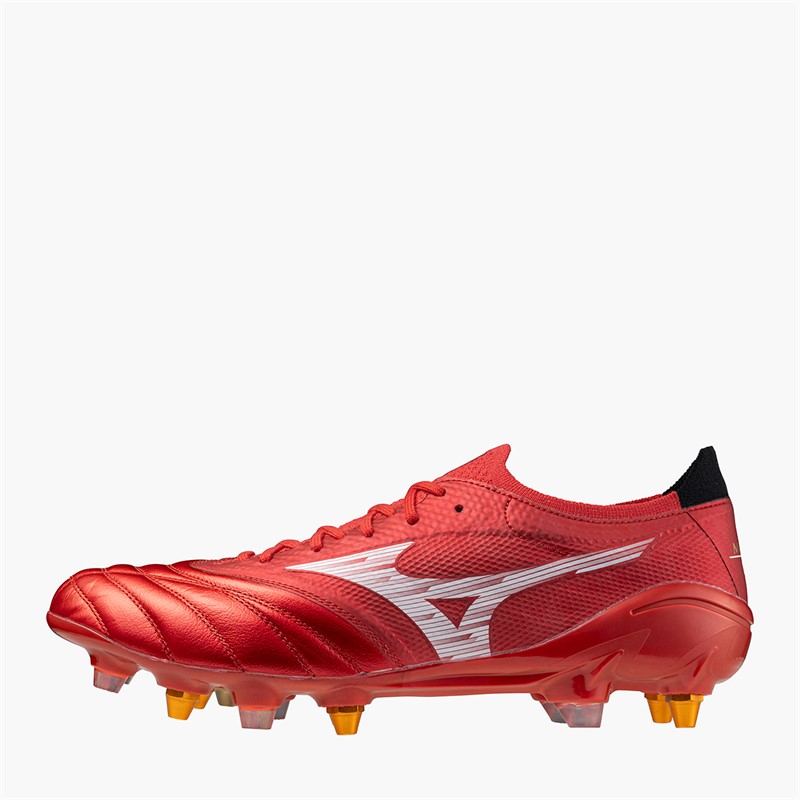 Mizuno Morelia Neo IV Beta Elite IX Soft Ground Rugby Boots – Red/White/Blackfrom £79.99
 Canterbury Phoenix Genesis Team Soft Ground Rugby Boots – White/Yellowfrom £75.00
 Adidas Kakari Elite Rugby Boots – Neon YellowNo offers today
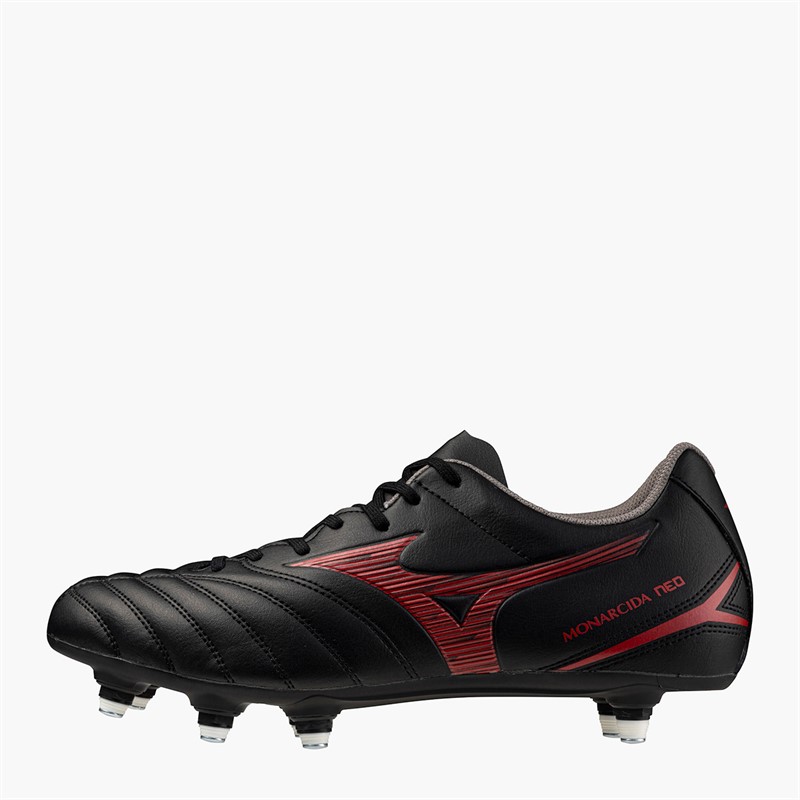 Mizuno Monarcida Neo III Select Soft Ground Rugby Boots – BlackNo offers today
 Canterbury Speed Infinite Elite Soft Ground Rugby Boots – BlueNo offers today
 Adidas Adizero RS15 Pro Firm Ground Rugby Boots – Off Whitefrom £69.99
FAQ
What is the difference between firm ground vs soft ground rugby boots?
Firm ground boots have shorter, moulded studs suited to dry, firm pitches, while soft ground boots have longer, usually replaceable studs that dig into wet, muddy surfaces. FG is lighter and lower maintenance; SG offers more bite in the mud.
Can I use firm ground boots in winter?
You can, but on heavy, muddy pitches the shorter moulded studs may struggle to grip. Soft ground boots with longer studs generally handle wet UK winter conditions better.
Do I need both types of rugby boots?
Not necessarily. If you play mostly in one type of condition, one pair covers it. Players whose season spans dry autumn and muddy winter grass often find it useful to own both, or a hybrid sole.
Related guides
RugbyDeals helps you compare prices across the retailers and products we feature on our site. Prices and stock can change, so always confirm the final details on the retailer’s site before buying. Our content is for general information only and isn’t safety, medical or buying advice — always follow the manufacturer’s guidance and speak to a professional where it matters. We may earn a commission when you buy through our links, at no extra cost to you.