
The adidas Kakari rugby boots are the brand's forward line. Where the RS15 chases speed, the Kakari is built for the set piece: traction, stability and durability in contact. It is the boot for the tight five, and for anyone whose job is anchoring a scrum rather than finishing in the corner.
This guide explains what separates the three tiers, why the eight-stud outsole matters, and which model suits your position and budget across the rugby boots we compare.
The three tiers at a glance
All three are soft-ground boots built around the same job. What changes between them is the upper material and the outsole construction.
| Tier | Model | What defines it |
|---|---|---|
| Entry | Kakari | Synthetic leather upper, eight-stud split outsole |
| Club | Kakari Elite | Imitation leather upper, internal support system |
| Top | Kakari RS | Fusionskin leather upper, one-piece outsole |
Why eight studs matter
The defining feature of the line is the eight-stud outsole. Most speed boots use six studs. Adding two more spreads the load and gives more anchor points, which is what you want when you are transferring force through a scrum rather than sprinting in a straight line.
adidas describes the base model's version as a split outsole, which keeps weight down while still digging in for multi-directional traction on soft ground. Our guide to the best rugby boots for a forward covers stud configuration in more detail.
- Front row and second row: the eight-stud platform is built for exactly this job.
- Back row: flankers and number eights often prefer the lighter six-stud RS15 line for mobility.
- Backs: better served by the RS15 line, which is built around acceleration and kicking.
Kakari: the entry model
The standard Kakari pairs a synthetic leather upper, described as lightweight but durable, with the eight-stud split outsole that gives the line its character. It is a regular fit with a lace closure and synthetic lining, and the upper is made with at least 20% recycled materials.
adidas positions it for dynamic play in the forward line, supporting you through both sprints and scrum time. It is the value option that still gives you the full eight-stud platform, which makes it a sensible pick for newer players, junior forwards and anyone who wants durable traction without premium materials.
Kakari Elite: the club forward's boot
The Elite moves to a soft imitation leather upper that adidas says delivers a more custom fit, and adds an internal support system for stability under load. That is the part that matters when you are taking the strain in a scrum or hitting a breakdown.
It keeps the durable eight-stud outsole, adds a full lace closure for a secure fit, and includes stitching across the forefoot to add grip on the ball for more accurate contact. It suits forwards who play week in, week out and want a boot that beds in faster and holds the shape of their foot better than the standard model.
Kakari RS: the top tier
The RS is built for elite forward play, and it changes the construction rather than just the materials. Its lightweight one-piece outsole, rather than the split design of the models below, delivers multi-directional traction aimed at keeping you stable in muddy conditions. The upper is Fusionskin leather, reinforced in key areas to increase support where forwards take the most punishment.
Like the standard model, it is made with at least 20% recycled materials. It sits at the top of the range, built to shed weight without losing the support a forward needs when scrummaging or carrying into contact.
An important note on surfaces
Every boot in the Kakari range uses a soft-ground outsole. That is what makes it work in the mud, and it is also its limitation: these are built for soft, wet natural grass.
Before playing in them on artificial grass or dry, hard ground, check adidas' own guidance on what surfaces each boot is intended for. Using a boot outside the conditions it was designed for can affect both the boot and your grip. Our guide to firm ground vs soft ground rugby boots explains when each type makes sense.
Which Kakari should you buy?
- New to the front five, or buying for a junior forward: the standard Kakari.
- Playing and training most weeks and want a premium fit: the Kakari Elite.
- Playing at the top level and want the lightest supportive build: the Kakari RS.
- Playing in the backs or back row: look at the RS15 line instead.
Compare adidas Kakari prices
We track the Kakari range across the UK retailers we work with, so you can see which sizes are in stock and what each model is selling for right now.
 Adidas Kakari Elite Rugby Boots – Neon YellowNo offers today
 Adidas Kakari Elite Soft Ground Rugby Boots – Black/SilverNo offers today
 Adidas Kakari Elite Soft Ground Rugby Boots – Lucid Redfrom £41.00
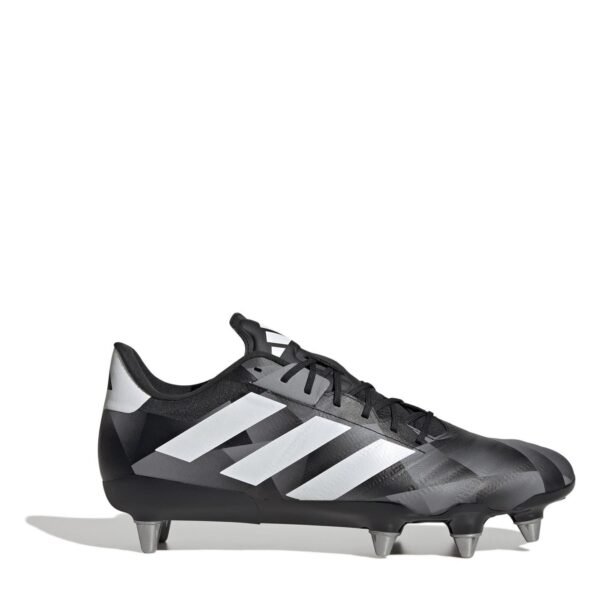 Adidas Kakari RS Soft Ground Rugby Boots – Black/Whitefrom £96.50
 Adidas Kakari Soft Ground Rugby Boots – White/Blackfrom £40.00
 Adidas Kakari Soft Ground Rugby Boots – Blk/Wht/Crbnfrom £58.00
 Adidas Kakari Soft Ground Rugby Boots – Lucid Redfrom £36.00
 Adidas Kakari RS Soft Ground Rugby Boots – Black/SilverNo offers today
Sizing
The Kakari range is a regular fit, and adidas builds it with the wider footprint forwards generally want. Senior boots are made in UK 6 to UK 15, including half sizes through the middle of the run. Junior boots are made in smaller sizes again, running from around UK 1.
The full size run is made across the range, but what you can actually buy depends on stock. The sizes shown on each product page are the ones available right now from the retailers we compare, so a size that has sold through at one retailer may still be sitting at another. Regular fit means your usual size is the right starting point, though if you are between sizes or buying for someone else it is worth measuring first — our rugby boot size guide covers how.
Frequently asked questions
What is the order of the adidas Kakari range?
From entry to top: Kakari, Kakari Elite, then Kakari RS. Each step up changes the upper material or the outsole construction rather than simply restyling the same boot.
Why do Kakari boots have eight studs?
More studs spread the load and give more anchor points, which helps when you are transferring pushing power through a scrum rather than accelerating in a straight line. It is the defining feature of the line.
What is the difference between the Kakari and the Kakari RS?
Both give you the eight-stud platform, but the construction differs. The standard Kakari uses a synthetic leather upper on a split outsole. The RS uses a Fusionskin leather upper reinforced in key areas, on a one-piece outsole designed to cut weight while keeping stability.
Are Kakari boots only for forwards?
They are designed for forward play. adidas specifies the line for the forward line and builds it around traction and stability in contact. Back-row players who cover a lot of ground often prefer the lighter RS15 line instead.
Can I wear Kakari boots on artificial grass?
They are built with soft-ground outsoles for soft, wet natural grass. Check adidas' guidance on suitable surfaces before using them on artificial turf or hard ground.
Kakari or RS15?
It comes down to your job on the pitch. If your game is scrummaging, contact and holding a platform, the Kakari is built for it. If it is running, kicking and changing direction, the RS15 line is the one to look at.
Related guides
- Best Rugby Boots for a Forward
- How to Choose Rugby Boots
- Firm Ground vs Soft Ground Rugby Boots
- Rugby Boot Size Guide
- The adidas RS15 range explained
RugbyDeals helps you compare prices across the retailers and products we feature on our site. Prices and stock can change, so always confirm the final details on the retailer's site before buying. Our content is for general information only and isn't safety, medical or buying advice — always follow the manufacturer's guidance and speak to a professional where it matters. We may earn a commission when you buy through our links, at no extra cost to you.